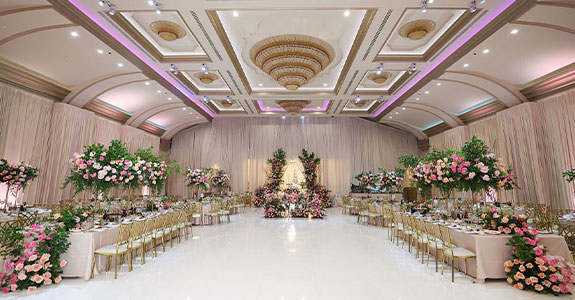
A wedding venue tour is where couples learn how an event will actually work, not just how it looks. When you tour a venue, you’re answering one core question: Can this space truly support our wedding from planning through the final moment? The right questions during a wedding venue tour reveal how flexible the venue is, how much support is included, and how much responsibility you’ll carry after signing a contract.
As you prepare for a tour, it helps to think in categories rather than individual questions. Couples should be ready to ask about availability and booking policies, capacity and layout comfort, what is included versus outsourced, vendor rules and restrictions, event timing and access, and on-site support during the event. These areas shape how planning will feel after the tour is over. When you keep those themes in mind, you’re less likely to miss something important and more likely to leave the venue with a complete picture of how your wedding would actually come together.
Many couples focus on décor and emotion during tours, then feel overwhelmed later when logistics appear. Knowing what questions to ask at a wedding venue turns the tour into a decision-making tool instead of a guessing game. This guide explains what to ask when touring a wedding venue, how many venues to tour, and how to compare them with clarity instead of confusion.

How to Prepare for a Wedding Venue Tour So It’s Actually Useful
Preparation determines the value of a wedding venue tour. Without context, couples often leave tours saying, “It was nice,” but can’t explain why it worked or didn’t.
Before touring, couples should align on a few fundamentals. You don’t need final answers, but you do need direction. Guest count affects layout, pricing, and flow. Budget comfort helps you evaluate value instead of reacting to numbers. Date flexibility can open better availability and pricing.
Helpful preparation includes:
- A guest count range, not a finalized list
- A budget comfort range, not a strict ceiling
- Flexibility around season or day of the week
- Clear priorities, such as indoor space, large capacity, or included services
Couples often ask how many wedding venues to tour. In practice, two to four tours are enough. After that, details blur and comparison becomes harder. The right venue usually becomes clear because it answers more questions with fewer compromises.
What to Pay Attention to During a Wedding Venue Tour (Beyond Style)
Décor creates first impressions, but layout determines experience. During a wedding venue tour, imagine the event unfolding in real time.
Walk the space as a guest would. Notice where people naturally gather, how the bar and dance floor connect, and whether the room feels open or congested. Pay attention to ceiling height, acoustics, and lighting control. These details influence comfort, energy, and how long guests stay engaged.
A venue that understands flow will explain how the room adapts from dinner to dancing. That explanation matters more than how the space looks staged for photos.
Availability, Dates, and Booking Flexibility
One of the most important questions to think about during a wedding venue tour isn’t simply, “Is our date available?” A more useful question is, “How flexible is this venue if our plans change?” Weddings evolve as guest lists grow, budgets adjust, or priorities shift, and the way a venue handles change can make planning feel manageable or stressful.
During the tour, couples should ask how the venue approaches availability and booking from a practical standpoint:
- Date holds and decision timelines, so you understand how long you can consider options before committing
- Peak versus off-peak pricing, which often affects not just cost but availability and flexibility
- Guest count changes after booking, including any thresholds that trigger pricing or layout adjustments
- Seasonal demand, especially for popular months, when venues may book far in advance
The goal of these questions isn’t just to secure a date; it’s to understand how the venue supports couples throughout the planning journey. Clear, thoughtful answers signal a venue that plans for real-life changes, not just ideal scenarios on booking day.
Capacity, Layout, and Guest Comfort
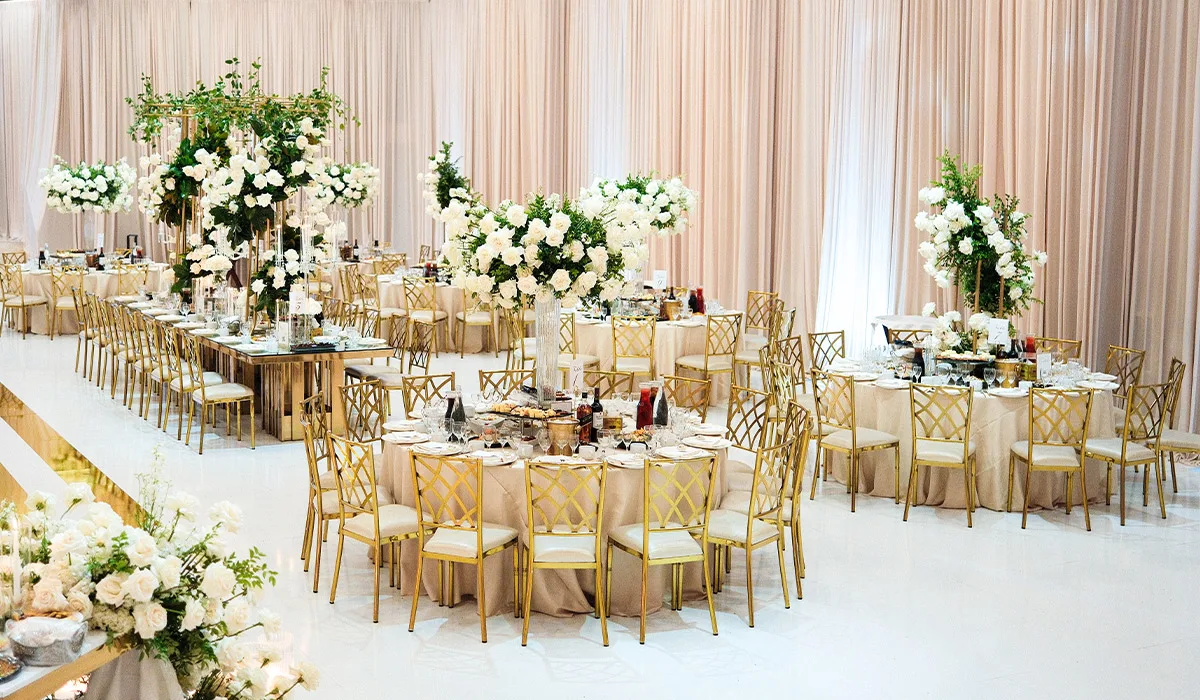
When couples think about what questions to ask a wedding venue, capacity is often misunderstood. A venue’s maximum number may look impressive on paper, but maximum capacity doesn’t always translate to comfort. What matters more is how the space functions at different guest counts.
During a wedding venue tour, ask how layout, spacing, and service adjust as numbers change. A well-run venue should be able to explain how the room feels with 200 guests compared to 350, how table spacing affects movement, and how the dance floor and bar placement adapt to keep the event flowing naturally.
Guest comfort also goes beyond the main ballroom. It includes accessibility for all guests, a smooth arrival and parking experience, and clear entry points that prevent congestion. Venues designed with large events in mind, such as Palladio Banquet Hall, with its expansive indoor ballroom and capacity of up to 500 guests, often plan layouts that maintain openness and energy even at higher guest counts.
Comfortable guests stay longer, engage more, and remember the celebration for how it felt, not just how it looked.
What’s Included and How That Shapes Planning
Understanding what’s included is one of the most revealing moments during a wedding venue tour, because it shows you how much of the planning workload the venue absorbs, and how much remains on your plate.
Instead of focusing only on the price, couples should take time to understand what that price actually covers. Some venues offer the space alone, leaving you responsible for hiring and coordinating every additional service. Others include key elements such as catering, staffing, rentals, and event coordination. The difference isn’t just financial; it directly affects how complex your planning process will be.
During the tour, ask detailed questions about:
- Catering and bar service, including menu flexibility and service style
- Tables, chairs, linens, and setup, so you know what’s provided versus rented externally
- Staffing and on-site coordination, including who manages timing and transitions
- Breakdown responsibilities, so expectations are clear at the end of the event
Venues that include multiple services under one agreement often make planning more straightforward. With fewer vendors to manage, fewer contracts to track, and fewer timelines to align, couples can focus more on the experience they want to create rather than the logistics required to make it happen.
Vendor Policies That Influence Creativity and Timing
Vendor policies often shape the planning experience more than couples expect. During a wedding venue tour, understanding how the venue works with outside professionals gives you insight into how much creative freedom and scheduling flexibility you’ll have later on.
Some venues allow complete freedom in vendor selection, while others operate with preferred or in-house partners. Neither approach is automatically better, but each comes with different planning realities. Knowing this early helps you avoid conflicts between your vision and the venue’s guidelines.
Couples should ask how the venue approaches:
- Outside vendors, including any approval process or restrictions
- Preferred vendor lists, and whether they are optional or required
- Catering policies, especially if food and service are handled in-house
- Alcohol service rules, such as bar hours and service style
- Overtime or extension fees, which can affect your event timeline
These wedding venue tour questions reveal more than pricing details. They show how adaptable the venue is when timelines shift, creative ideas evolve, or the celebration runs longer than expected. Clear policies make planning predictable and help couples align expectations before committing.
Timing, Access, and Event Flow
A well-run venue should be able to explain how your event unfolds from the moment vendors arrive to the final breakdown at the end of the night. During a wedding venue tour, this conversation helps you understand not just the schedule, but how organized and experienced the venue truly is.
Timing affects everything, from how relaxed your setup feels to how long guests can enjoy the celebration. If access windows are too tight or transitions aren’t clearly planned, the day can feel rushed even if everything looks beautiful.
During the tour, couples should ask clear questions about:
- How much access time is included, both before the event and after it ends
- When vendors can arrive, including setup windows for décor, catering, and entertainment
- How transitions are managed, such as moving from cocktail hour to dinner or from dinner to dancing
- What the end-of-night process looks like, including breakdown timing and guest departure flow
Venues that plan timing thoughtfully create breathing room throughout the event. Instead of watching the clock, couples and guests can stay present, knowing each moment has been accounted for and the celebration can unfold at a comfortable, natural pace.
Décor, Setup, and Customization Boundaries
Personal style plays a big role in how a wedding feels, but every venue has guidelines that shape what’s possible. During a wedding venue tour, understanding these boundaries early helps couples design with confidence instead of discovering limitations late in the planning process.
Rather than asking only what’s allowed, it’s helpful to ask why certain rules exist. Many guidelines are in place to protect the space, ensure safety, or keep events running on schedule. When venues explain these details clearly, it becomes easier to plan creatively within realistic limits.
During the tour, couples should discuss:
- Décor restrictions, including wall attachments, ceiling installations, or large structures
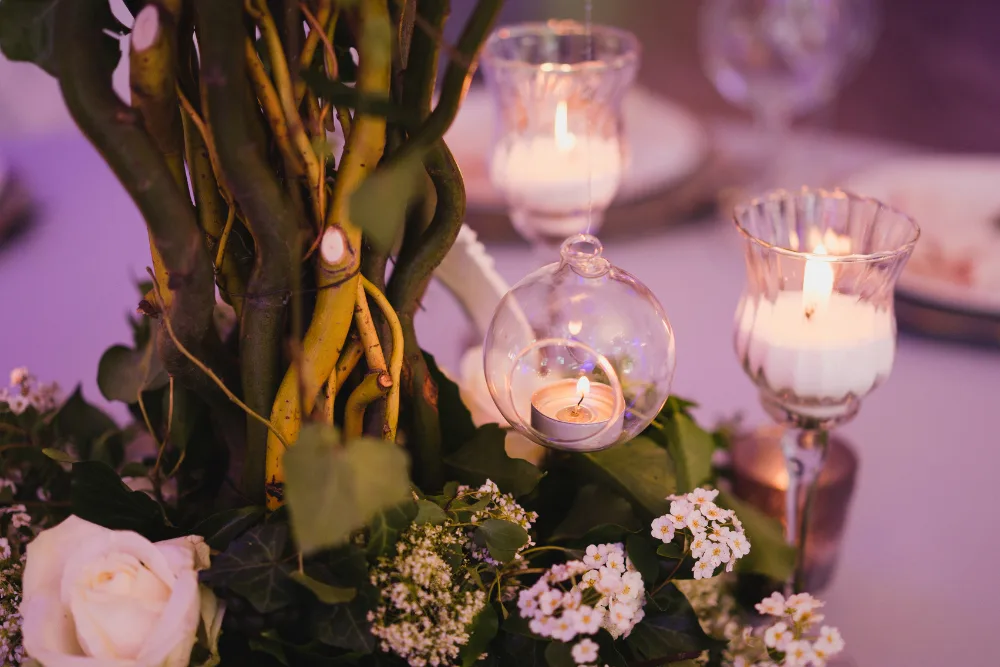
- Lighting control options, such as uplighting, dimming, or color changes throughout the event
- Candle or installation policies, especially around open flames or specialty effects
- Layout flexibility, including how furniture can be arranged or adjusted during the event
Clear expectations don’t limit creativity; they guide it. When couples understand what the venue supports, they can focus on ideas that enhance the space rather than planning décor elements that may not be feasible.
Coordination and On-Site Support
One of the most overlooked parts of a wedding venue tour is understanding who takes charge once the event begins. Many couples assume everything will “just run smoothly,” but that only happens when clear responsibility is in place.
During the planning phase, emails and meetings feel manageable. On the wedding day, however, decisions happen quickly. Vendors arrive, timelines shift slightly, and questions come up in real time. Knowing who is responsible for managing those moments makes a significant difference in how relaxed the couple feels.
During the tour, couples should take time to clarify:
- Who is physically on-site during the event, and for how long
- Whether coordination is included, and what level of involvement that means
- Who your main planning contact will be, both before and during the event
- How issues are handled in real time, such as timing adjustments or vendor questions
Strong on-site support allows couples to stay present instead of being pulled into logistics. When responsibilities are clearly defined, small adjustments can be handled quietly and efficiently, keeping the focus where it belongs: on the celebration itself rather than behind-the-scenes details.
Comparing Venues After Touring
After visiting several venues, clarity comes from comparison. Emotions fade quickly, but practical differences remain. This is where couples often benefit from slowing down and reviewing each venue side by side.
Instead of asking which venue felt nicest during the tour, shift the focus to how each one would support the entire planning process and the event itself. Look closely at:
- What is included versus what must be arranged separately, which affects both the budget and the workload
- The level of planning and on-site support, especially on the event day
- Guest comfort, including layout, flow, accessibility, and arrival experience
- The total effort required, from vendor coordination to timeline management
When you compare venues this way, patterns become clear. One option usually stands out not because it was the most dramatic, but because it answered more questions with fewer compromises. This comparison process often naturally answers the question of how many wedding venues to tour, because once the right fit is clear, additional tours no longer add value.

Why the Right Venue Simplifies Everything
The right venue doesn’t just host your wedding, it quietly shapes how easy or difficult the entire planning process feels. When the space, services, and support are aligned, decisions feel lighter. Instead of managing countless moving parts, couples can focus on the moments that matter most.
Venues that offer thoughtful layouts, experienced on-site teams, and inclusive services tend to reduce planning fatigue. Fewer handoffs mean fewer misunderstandings. Clear processes mean fewer last-minute questions. Over time, that simplicity adds up to a more relaxed experience, both during planning and on the wedding day itself.
This is why many couples exploring their options appreciate seeing how a venue operates during a tour, not just how it looks. Walking the space, asking detailed questions, and understanding how the venue supports events from start to finish often brings immediate clarity. If you’re ready to take that step, scheduling a tour with Palladio Banquet Hall is the best way to see if our venue truly fits your needs, and to picture how your celebration could come together with confidence.
Frequently Asked Questions About Wedding Venue Tours
How long should a wedding venue tour last?
Most wedding venue tours last between 30 and 60 minutes. This allows enough time to walk the space, review layout options, and ask meaningful questions without feeling rushed.
Should pricing be discussed on the first wedding venue tour?
Yes. Early pricing conversations help determine whether the venue aligns with your expectations and prevent surprises later in the planning process.
Can guest count change after booking a venue?
Many venues allow guest count adjustments within reason. Always ask how changes affect layout and pricing.
Is it better to tour venues before setting a wedding date?
Yes. Touring before locking a date often increases flexibility and options.
What should couples bring to a wedding venue tour?
Bring a guest count range, budget comfort range, date flexibility, and a written list of priorities and questions.